

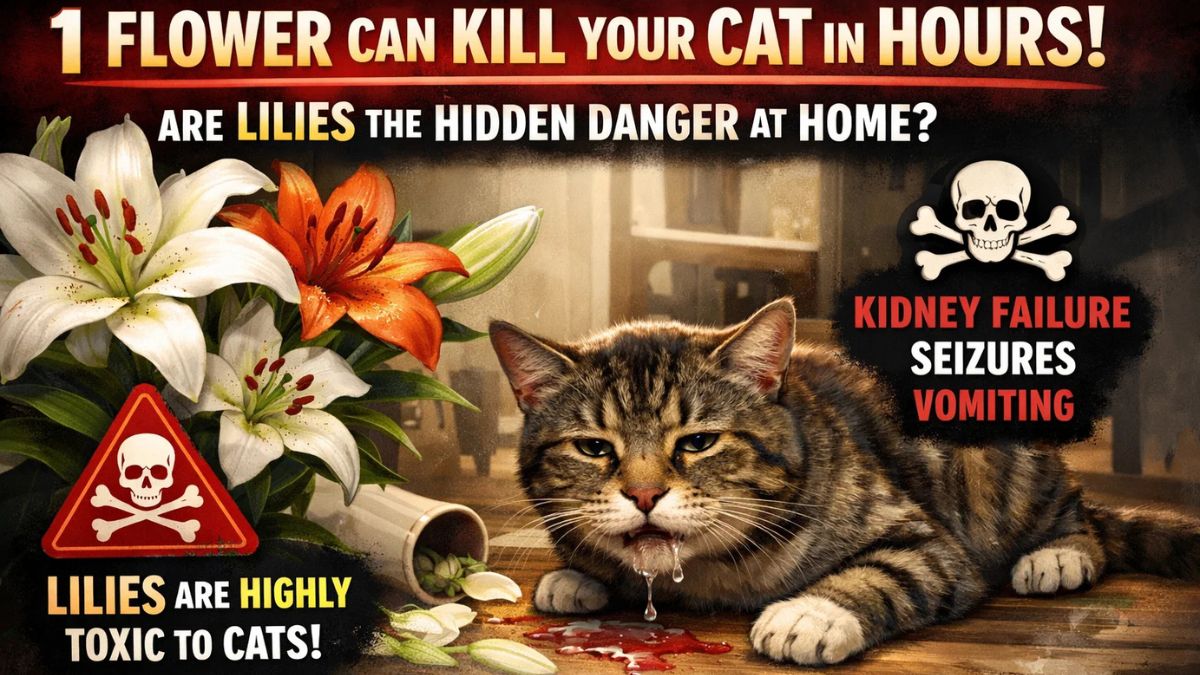
1 Flower Can Kill Your Cat in Hours! Lily flowers (species Lilium and Hemerocallis) are cherished worldwide for their beauty and fragrance. Varieties such as the Easter Lily, Asiatic Lily, Tiger Lily, Stargazer Lily, Calla Lily, and Day Lily adorn homes and gardens alike. However, very few people are aware that these flowers are highly toxic—particularly to cats. This beautiful plant can prove fatal to your pet cat; therefore, it is absolutely crucial to be informed about this danger.
Every Part of the Plant Is Toxic
Every single part of the lily plant—whether it be the petals, stem, leaves, or pollen—is poisonous to cats. Even if you simply keep a lily flower in a vase of water within your home, that water itself may contain toxic elements. Often, pollen from the flower settles on a cat’s body or fur, and the cat inadvertently ingests it while grooming itself. Such a seemingly minor oversight can quickly escalate into a grave danger.
Even a Tiny Amount Can Be Fatal
The most alarming aspect is that even a very small quantity of lily plant material can be dangerous to a cat. If a cat accidentally consumes even a tiny piece of this plant, it can suffer kidney failure within 12 to 72 hours. This condition deteriorates rapidly, and without timely medical intervention, it can lead to the cat’s death. Therefore, this threat should under no circumstances be taken lightly.
How to Recognize Symptoms of Poisoning
If your cat has come into contact with a lily plant and ingested any part of it, certain initial symptoms will begin to manifest. These include: repeated vomiting (which may contain fragments of the plant), excessive drooling, loss of appetite, lethargy, and signs of depression. As the condition worsens, signs of kidney failure begin to manifest—such as excessive urination or a complete absence of urine output, dehydration, and extreme weakness. If these symptoms are ignored, the condition can prove to be life-threatening.
Timely Identification and Treatment Are Essential
The most effective measure against lily poisoning is timely identification and immediate treatment. The moment you suspect that your cat has ingested any part of a lily plant, contact a veterinarian immediately. If treatment is administered within the first 24 hours, the cat’s chances of survival increase significantly. Veterinarians administer the necessary treatments to protect the kidneys, thereby helping to bring the condition under control.
How to Keep Your Pet Safe
The most crucial step in keeping your cat safe is to keep it completely away from lily plants. Do not keep lily flowers in your home, whether for decoration or planted in the garden. If there are lily plants in your vicinity, ensure that your cat cannot access them. Remember, a little caution can save your pet’s life.
Conclusion
While lily flowers may be visually appealing, they pose a silent threat to cats. Their toxicity is so potent that even a minor oversight can prove fatal. Therefore, if you own a cat, maintaining a safe distance from lilies remains the safest option. Awareness and vigilance are the only things that can keep your beloved pet safe.
FAQs
Q. Are lilies toxic to cats?
A. Yes, all types of lilies are extremely toxic to cats.
Q. Which parts of the lily are dangerous?
A. All parts—petals, leaves, stems, and even pollen—are toxic.
Q. Can small exposure harm a cat?
A. Yes, even a tiny amount can cause severe kidney failure.
















Leave a Reply