

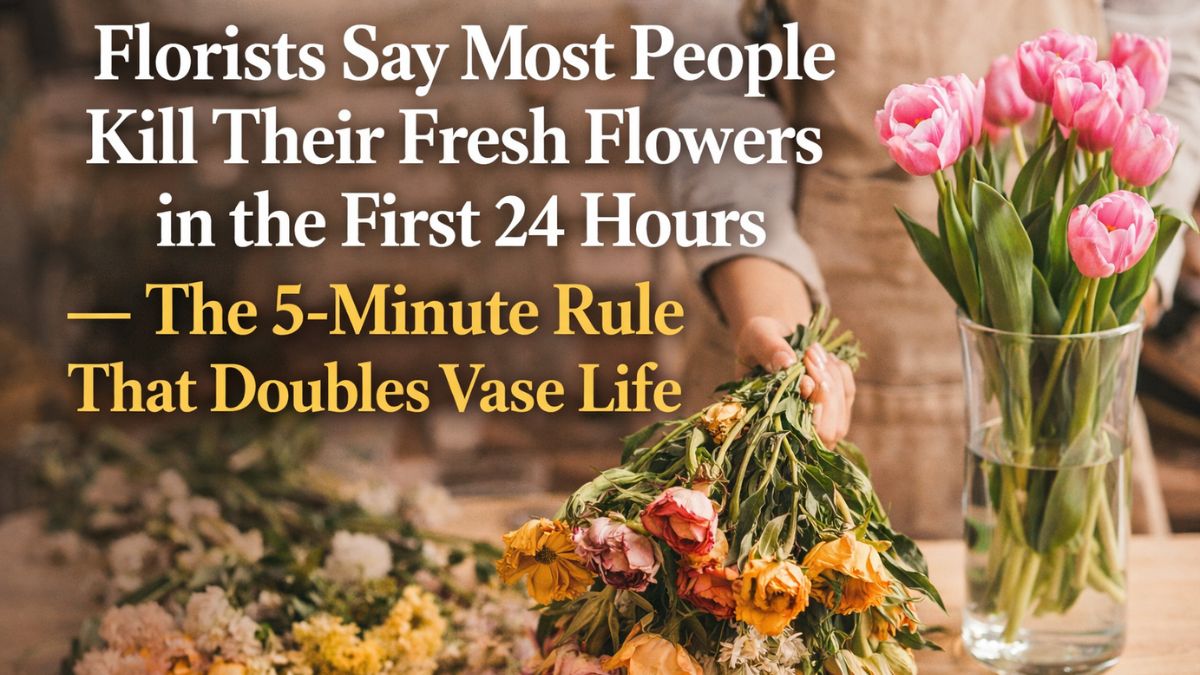
There’s something undeniably magical about bringing home a fresh bouquet. Whether it’s a gift from someone special or a little act of self-love, flowers instantly brighten a room and lift your mood. But here’s a truth most people don’t realize—what you do in the first 24 hours determines whether your flowers will thrive for a week or wilt within days.
Florists have seen it all. Beautiful, freshly cut flowers that should last over a week end up drooping overnight, not because they were low quality, but because of simple mistakes made right after bringing them home. The surprising part is that fixing this doesn’t require expensive products or expert skills. It comes down to one simple habit—a 5-minute rule that can completely transform how long your flowers last.
Why Flowers Die So Quickly at Home
When flowers are cut, they are essentially separated from their life source. From that moment on, they rely entirely on how well you care for them. The biggest issue is that most people unknowingly disrupt the flower’s ability to absorb water.
One of the most common mistakes is placing flowers straight into a vase without preparing them. The stems, if left untreated, can seal themselves off or get blocked by bacteria. This prevents water from traveling up to the petals, causing the flowers to dehydrate quickly.
Another overlooked factor is water quality. Tap water often contains impurities that can accelerate bacterial growth. Combine that with unclean vases, and you have the perfect environment for flowers to deteriorate faster than expected.
Temperature also plays a role. Flowers exposed to direct sunlight, heat, or even drafts from fans and air conditioners tend to lose moisture rapidly. Within just a few hours, they begin to show signs of stress.
The 5-Minute Rule That Changes Everything
Florists swear by a simple yet powerful habit known as the 5-minute rule. It’s not complicated, and it doesn’t require anything fancy. But it works.
The moment you bring flowers home, don’t just unwrap them and drop them into water. Instead, take five minutes to properly prepare them. Start by trimming the stems at an angle under running water. This prevents air bubbles from forming inside the stem, which can block water intake.
Next, remove any leaves that would sit below the waterline in the vase. Leaves submerged in water decay quickly and create bacteria, which harms the flowers. Then, place the stems into clean, fresh water immediately.
That’s it. Just five minutes of mindful care can double the life of your bouquet. It ensures that the flowers can drink properly and stay hydrated from the very beginning.
The Science Behind the Simple Rule
You might wonder how such a small step can make such a big difference. The answer lies in how flowers absorb water.
When stems are cut, they begin to form tiny blockages. If left untreated, these blockages prevent water from reaching the petals. By cutting the stems at an angle, you increase the surface area for water absorption. Cutting under water prevents air from entering the stem, which could otherwise create an airlock.
Removing submerged leaves reduces bacterial growth. Bacteria clog the stems just like plaque clogs arteries, cutting off the flow of nutrients. Clean water and a clean vase create a healthier environment for the flowers to survive longer.
In short, the 5-minute rule works because it addresses the root causes of early wilting—dehydration and bacteria.
Small Habits That Make a Big Difference
Once you’ve followed the 5-minute rule, maintaining your flowers becomes much easier. But consistency is key. Changing the water every two to three days can significantly extend the life of your bouquet. Each time you change the water, it’s also a good idea to trim the stems slightly again.
Placement matters more than people think. Keeping flowers away from direct sunlight, heat sources, and ripening fruits can help them last longer. Fruits release ethylene gas, which speeds up the aging process in flowers.
Even the type of vase you use can have an impact. A vase that allows enough space for stems to breathe and spread out prevents overcrowding and improves water circulation.
These small habits may seem insignificant, but together, they create the ideal conditions for your flowers to thrive.
Why Most People Skip This Step
It’s not that people don’t care about their flowers—it’s that they don’t know better. In today’s fast-paced world, convenience often takes priority. When you bring flowers home, the instinct is to display them as quickly as possible.
There’s also a misconception that fresh flowers are naturally short-lived. People assume that wilting within a couple of days is normal, so they don’t question their care routine.
Florists, however, know the difference. They understand that flowers are delicate but not fragile. With the right care, many blooms can last much longer than expected.
The Emotional Value of Making Flowers Last
Flowers aren’t just decorative—they’re emotional. They carry meaning, memories, and moments. Whether it’s a romantic gesture, a celebration, or a symbol of comfort, flowers often represent something deeper.
When flowers wilt too soon, it can feel disappointing, almost like losing a small piece of that moment. On the other hand, when they last longer, they continue to bring joy day after day.
Taking just five minutes to care for your flowers isn’t just about preserving petals—it’s about extending the feeling they bring into your life.
A New Perspective on Flower Care
Once you understand the importance of the first few minutes, your entire approach to flowers changes. You stop seeing them as temporary decorations and start treating them as living elements that need attention and care.
This shift in perspective makes a noticeable difference. You become more mindful of where you place them, how often you change their water, and how you handle them.
It’s a small change, but it creates a more intentional and rewarding experience.
The Difference You’ll Notice
If you’ve ever wondered why your flowers don’t last as long as expected, the answer likely lies in those first few minutes. Try the 5-minute rule just once, and you’ll see the difference.
Flowers that used to droop in two days will stay fresh for nearly a week or more. Petals will remain vibrant, stems will stay firm, and the overall bouquet will look healthier for longer.
It’s not magic—it’s simply giving your flowers the best possible start.
Final Thoughts
Fresh flowers have a way of making life feel a little more beautiful. But their beauty doesn’t have to be short-lived. The secret isn’t hidden in expensive products or complicated techniques. It’s in a simple, mindful routine that takes just five minutes.
The next time you bring home a bouquet, pause before placing it in a vase. Take those few extra minutes to prepare the stems, clean the water, and set them up properly. That small effort can double their lifespan and keep your space filled with freshness and color for days longer than you thought possible.
Sometimes, the simplest habits create the biggest impact. And in this case, five minutes is all it takes to keep your flowers—and the joy they bring—alive much longer.
FAQs
1. Why do fresh flowers die within 24 hours?
Most flowers die quickly due to improper care, like not trimming stems, dirty water, and bacterial growth blocking water absorption.
2. What is the 5-minute rule for flowers?
It means spending five minutes trimming stems, removing lower leaves, and placing flowers in clean water immediately after bringing them home.
3. How often should I change the water in a vase?
You should change the water every 2–3 days to keep it clean and prevent bacteria that can shorten flower life.






Leave a Reply